For millions of people, the trading app on their phone is now the main way they reach financial markets. Opening an account, checking a chart, or placing an order takes a few taps, where it once needed a broker on the phone or a desktop terminal.
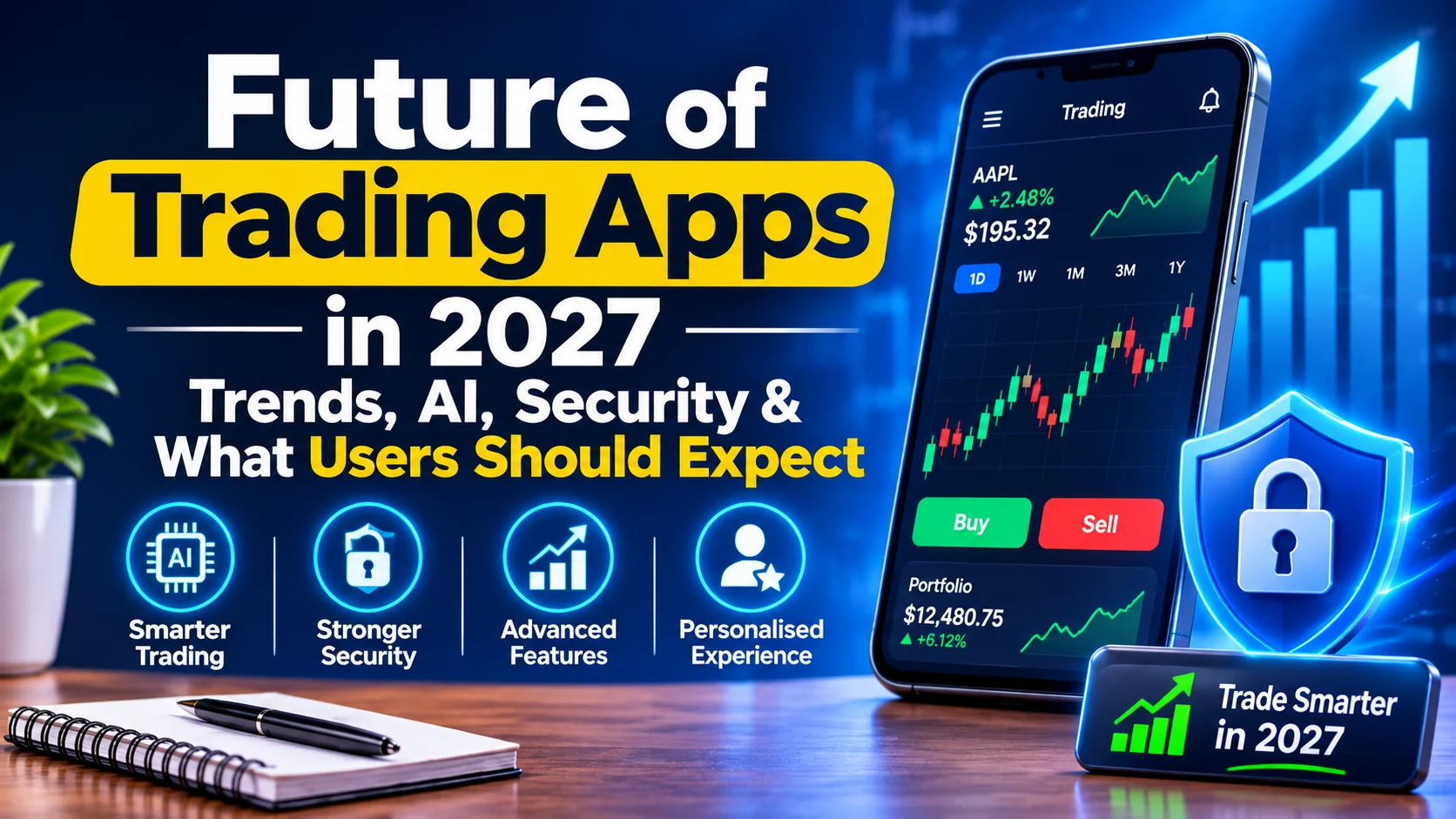
That convenience is changing fast. Artificial intelligence, better data tools, stronger security, and closer attention from regulators are all shaping the next generation of trading platforms. The future of trading apps in 2027 will likely bring smarter tools, but also new risks that users need to understand.
In this guide, you will learn:
- Which technologies are shaping trading apps 2027 and beyond
- What new features you can realistically expect
- How AI may help, and where it can mislead you
- How security is improving and what you still need to do yourself
- How to choose a trustworthy trading app, step by step
Risk notice: Trading involves real financial risk. You can lose some or all of the money you put in. Nothing in this article is investment advice.
How Trading Apps Are Changing in 2027
Trading apps are moving from simple “buy and sell” tools toward full financial platforms. Three forces are behind this change.
1. Technology is getting smarter. AI assistants, faster cloud systems, and richer market data are becoming standard rather than premium features.
2. Regulators are paying closer attention to app design. Regulators have started studying how app design affects user behaviour, not just what products are sold. The UK’s Financial Conduct Authority ran a large experiment on this. In an online experiment with over 9,000 consumers, the FCA tested 4 digital engagement practices (DEPs) looking at their effect on trading frequency and investment risk. It found that push notifications increased the number of trades made by 11%, while points and prize draws led to a 12% rise.
3. Fraud is becoming more sophisticated. Scammers now use the same technology as legitimate platforms, which pushes apps to invest more in fraud detection and identity checks.
Together, these trends suggest that apps will become more capable, and that responsible design will matter more than flashy features.
Key Technologies Shaping the Future of Trading Apps
Artificial Intelligence and Machine Learning
Machine learning is software that finds patterns in large amounts of data. In trading apps, it is already used for things like summarising news, flagging unusual account activity, and personalising what you see. By 2027, expect AI to be more visible through chat-style assistants that answer questions about your portfolio or explain market terms.
Automated Trading and Algorithmic Tools
Algorithmic trading means using pre-set rules to place orders automatically, for example “sell if the price drops 5%”. These tools were once limited to professionals. Automated trading apps are now making rule-based strategies, recurring investments, and trading bots available to everyday users.
Advanced Charting and Real-Time Market Data
Mobile charting has improved a lot. Many apps already offer dozens of technical indicators and drawing tools. The trend is toward faster data feeds, cleaner mobile layouts, and tools that explain what an indicator actually means rather than just displaying it.
Blockchain and FinTech Integration
Some platforms now offer crypto assets next to stocks and funds. Blockchain technology may also play a role in settlement and record-keeping over time. However, crypto products are often regulated differently from traditional investments, so protections may not be the same.
Cloud Computing and Faster Mobile Experiences
Cloud infrastructure lets apps handle more users at once and sync your account across phone, tablet, and desktop. The practical result is faster loading and fewer outages during busy market periods, although no platform is outage-proof.
New Features Users Can Expect in Trading Apps in 2027
Here are the best trading app features likely to become more common. Treat these as reasonable expectations based on current direction, not guarantees.
| Feature | What It Means for You | What to Watch For |
|---|---|---|
| Personalised dashboards | Your home screen shows the assets and data you care about | Personalisation can also nudge you toward more trading |
| AI-powered market insights | Plain-language summaries of news and price moves | Summaries can be wrong or miss context |
| Better portfolio tracking | Clear view of performance, fees, and allocation | Check whether fees are fully included |
| Advanced risk tools | Stop-loss orders, exposure alerts, position limits | Stop-losses may not execute at your exact price in fast markets |
| Improved accessibility | Larger text, voice control, screen-reader support | Simple design should not hide important risk details |
| Multi-asset trading | Stocks, ETFs, forex, crypto, and more in one app | Each asset type carries different risks and protections |
How AI Could Transform the Trading Experience
AI-powered trading apps are one of the most talked-about online trading trends. Here is a balanced look.
Potential Benefits
- Faster research: AI can summarise earnings reports or news in seconds.
- Education on demand: Beginners can ask “What is a limit order?” and get an instant explanation.
- Fraud detection: AI can spot unusual login or withdrawal patterns and block them.
- Personalised alerts: Notifications based on your actual holdings rather than generic market noise.
Limitations
AI models learn from past data. Markets react to new events such as interest rate decisions, wars, or surprise earnings, which no model can reliably predict. An AI summary is only as good as the data behind it, and it can state wrong information with confidence.
Real Risks to Know
Regulators have already warned about AI being used as a marketing hook. The SEC, NASAA, and FINRA jointly issued an investor alert to make investors aware of the increase of investment frauds involving the purported use of artificial intelligence (AI) and other emerging technologies. Their advice is clear: be wary of claims, even from registered firms and professionals, that AI can guarantee amazing investment returns.
There is also a problem called “AI washing”, where firms exaggerate their AI abilities. The SEC has charged and settled claims with two investment advisers with making false and misleading statements about their use of artificial intelligence (AI).
Bottom line: Use AI as a research assistant, not as a decision-maker.
Trading App Security in 2027: What Users Should Know
Secure trading platforms rely on several layers of protection. Here is what each one does.
Biometric Authentication
Fingerprint and face recognition make logging in faster and harder to fake than a simple password. Most major apps already support this, and it is likely to become the default.
Two-Factor Authentication (2FA)
2FA asks for a second proof of identity, such as a code from an authenticator app. Authenticator apps and hardware keys are generally safer than SMS codes, which can be intercepted through SIM-swap attacks.
Data Encryption
Encryption scrambles your data so outsiders cannot read it while it travels between your phone and the platform. Look for apps that clearly explain how they protect data in their privacy policy.
Fraud Prevention
Platforms increasingly use behaviour monitoring to flag suspicious activity, such as a login from a new country followed by a large withdrawal. Deepfakes are a growing threat here. NASAA warns that AI technology might be used to impersonate a family member or friend, with the intent to convince an investor to transfer money or securities out of an investment account.
Account Protection and Privacy
Your own habits still matter most:
- Use a unique password for your trading account
- Turn on 2FA and biometric login
- Never share codes with anyone, including people claiming to be “support”
- Set withdrawal whitelists if your app offers them
- Review login history regularly
Are Future Trading Apps Suitable for Beginners?
Yes, if beginners use them carefully. Many apps are adding tools that make learning easier:
- Demo accounts: Practise with virtual money before risking real funds
- In-app tutorials: Short lessons on order types, fees, and risk
- Simplified interfaces: Fewer confusing buttons for new users
- Risk prompts: Warnings before complex or leveraged trades
One caution: an easy-to-use design can also make trading feel like a game. The FCA research found that DEPs can have a larger effect on those with lower financial literacy, women, and participants aged between 18-34. As a beginner, notice when an app is pushing you to trade more, and turn off non-essential notifications.
Risks and Challenges of Using Trading Apps
Technology improves tools, but it does not remove risk.
- Financial losses: Prices can move against you quickly, especially with leveraged products like CFDs or options.
- Overtrading: Easy access and constant alerts can lead to frequent trades, more fees, and emotional decisions.
- Cybersecurity threats: Phishing links, fake apps, and account takeovers remain common.
- Misleading AI-generated insights: AI summaries can be wrong, outdated, or overconfident.
- Platform reliability: Apps can crash or freeze during volatile markets, exactly when you may need them most.
- Regulatory and withdrawal concerns: Unregulated platforms may delay or block withdrawals. If you use an unauthorised firm in the UK, you will not have access to the Financial Ombudsman Service or be protected by the Financial Services Compensation Scheme (FSCS), so you are unlikely to get your money back if things go wrong.
How to Choose the Right Trading App in 2027
Use this checklist before you deposit any money.
1. Licensing and regulatory status
Check the regulator’s own register, not just the logo on the app’s website. In the UK, the FCA’s Firm Checker is the tool to use. It makes it easier to check if a firm is authorised and has permission for the service it’s offering you. Also match the contact details, because some firms pretend to be authorised firms, so always use the contact details on the Firm Checker. In the US, use the SEC’s Investor.gov and FINRA BrokerCheck.
2. Fees and hidden charges
Look beyond “zero commission”. Check spreads, currency conversion fees, inactivity fees, and overnight financing charges.
3. Deposit and withdrawal policies
Read how long withdrawals take, what methods are allowed, and whether there are minimums or fees.
4. Available financial instruments
Make sure the app offers what you actually want to trade, and understand the risk level of each product.
5. Security features
Confirm 2FA, biometric login, and clear data protection policies.
6. Customer support
Test support before you need it. Is there live chat, phone, or only email?
7. Demo account availability
A demo lets you learn the platform without risking money.
8. Transparency and reputation
Look for clear company ownership, published risk warnings, and independent reviews. Be wary of anyone promising guaranteed returns.
What Does the Future Hold for Trading Apps Beyond 2027?
It is too early to predict exact developments, but some directions seem worth watching:
- More conversational interfaces, where users manage portfolios by asking questions in plain language
- Closer regulatory focus on app design, especially gamification and AI advice
- Stronger identity verification as deepfake fraud grows
- Wider tokenisation of traditional assets, though its adoption and regulation are still uncertain
These are possibilities, not certainties. The pace will depend on technology, regulation, and how much users trust these tools.
Frequently Asked Questions
What is the future of trading apps in 2027?
Trading apps are likely to become more personalised, AI-assisted, and security-focused, with more assets in one place. Regulators are also paying closer attention to how app design affects trading behaviour.
Will AI change how people trade?
AI is already changing research, education, and fraud detection inside apps. It may make information faster to access, but it does not remove the need for your own judgement.
Are trading apps becoming safer?
Security tools such as biometrics, 2FA, and fraud monitoring are improving. However, scams are also getting more advanced, so users still need to protect their accounts actively.
Which features should beginners look for in a trading app?
Regulation, a demo account, clear fees, educational content, 2FA, and responsive customer support are the most important.
Will automated trading become more popular?
Automated tools are becoming easier to access for retail users. They can help with discipline, but a poorly designed rule can also lose money quickly.
Can AI predict financial market movements?
No tool can reliably predict markets. AI can analyse past data and patterns, but unexpected events regularly break those patterns. Be cautious of any platform claiming otherwise.
How can users identify a trustworthy trading app?
Check the official regulator register, confirm contact details match, read the fee and withdrawal terms, and avoid any app promising guaranteed or unusually high returns.
Conclusion
The future of mobile trading looks more intelligent, more connected, and more secure. AI assistants, better risk tools, and stronger authentication should make trading apps more useful for both beginners and experienced users.
But technology cannot remove market risk. The smartest move in 2027 is the same as today: choose a regulated platform, understand what you are trading, use AI as a helper rather than an oracle, and never invest money you cannot afford to lose.